

Available Room-Nights
Available rooms by category are multiplied by available nights after any closure periods.


This editable five-year workbook models room-night inventory, occupancy, ADR, ancillary income, costs, and financing into monthly and annual financial statements and management reports.
Use the workbook to plan a hotel development from operating assumptions through projected revenue, costs, cash flow, financing, and decision-oriented reporting.
Change room availability, occupancy, midweek and weekend ADR, seasonality, ancillary income, costs, staffing, capital spending, and funding assumptions to update the linked forecast.
The model converts room inventory into sold room-nights using occupancy, applies applicable midweek or weekend ADR, then adds enabled ancillary income.
Available rooms by category are multiplied by available nights after any closure periods.
Available room-nights are multiplied by occupancy for each room category and period.
Sold room-nights use the applicable midweek or weekend Average Daily Rate.
Enabled monthly food, parking, spa, events, or other guest-service income is added once.
Monthly room revenue and ancillary income combine, then annual revenue sums all months.
The Revenue Assumptions view organizes room availability, occupancy, ADR by room category, and extra monthly income used by the forecast.
 REVENUE ASSUMPTIONS
The COGS & OPEX view separates direct costs, variable expenses, and fixed operating expenses across the forecast period.
 COGS & OPEX
The Scenario Analysis view compares Low, Base, and High cases across revenue, gross margin, contribution margin, and EBITDA trends.
 SCENARIO ANALYSIS
The Dashboard combines model setup, scenario multipliers, core financials, cash flow, profitability, and payback charts in one management view.
 DASHBOARD
The ready-made model fits room-night hotel economics, while materially different revenue logic or reporting structures may call for custom modeling.
The template is a planning starting point, not a guarantee of performance.
Financial Models Lab can build or adapt a model when you need different revenue logic, operating schedules, or financial reporting.
ORDER A CUSTOM FINANCIAL MODELYou receive an instantly downloadable, editable Hotel Development financial workbook with five-year projections, scenarios, and linked financial reports.
Download the editable Excel workbook and replace assumptions with your project inputs.
Review projected results across five years with monthly and annual detail.
Compare Low, Base, and High cases through the model's scenario views.
Use linked P&L, cash flow, balance sheet, dashboard, and other confirmed reports.
The essential answers are visible in full, with no accordion clicks required.
It calculates sold room-nights from available inventory and occupancy, applies the applicable ADR, then adds enabled ancillary monthly income.
You can change opening timing, available rooms, closures, occupancy, midweek and weekend ADR, seasonality, and enabled ancillary income assumptions.
The Scenario Analysis view compares Low, Base, and High paths for revenue, margins, contribution margin, and EBITDA across the forecast.
The product page confirms P&L, cash flow, balance sheet, dashboard, summary, valuation, break-even, ROIC, charts, KPIs, ratios, and other reports.
Yes. Custom financial modeling can adapt revenue logic, operating schedules, and reporting when your requirements differ from the ready-made structure.
It is a planning forecast based on editable assumptions, not a guarantee of business performance or financial results.
You get a comprehensive, easy-to-use hotel feasibility study template that covers everything from initial investment to long-term profitability analysis.
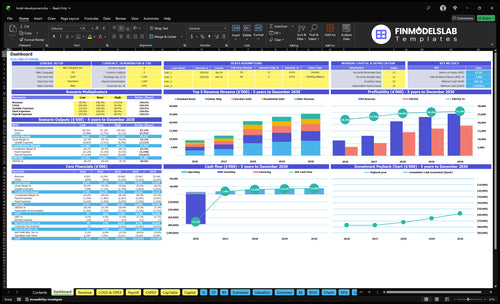
Core inputs and core outputs
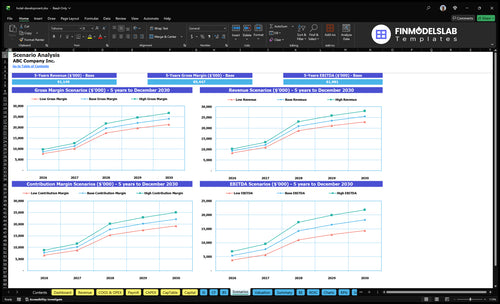
Three scenario analysis
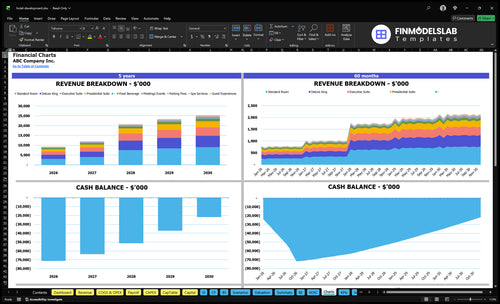
Presentation ready
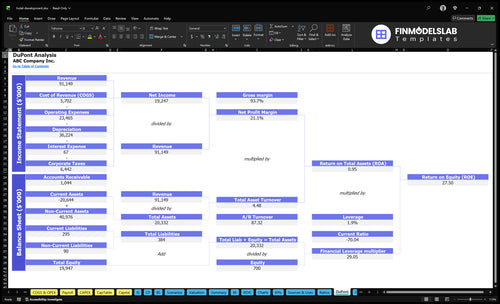
DuPont analysis
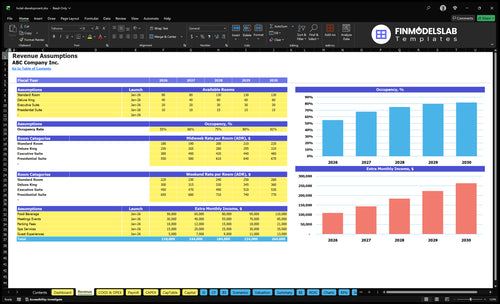
Researched revenue assumptions
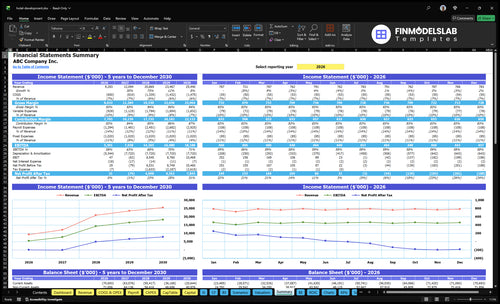
Lender-friendly financial outputs
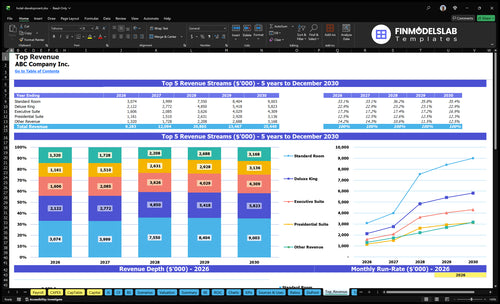
Revenue stream detailed view
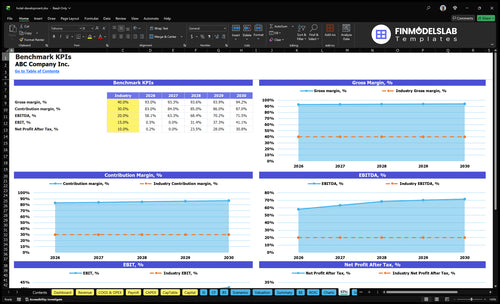
Performance metrics benchmark

One broken cell in a hotel model can throw off room revenue, debt service, and returns, but this template kept the links clean. I saved hours I would have spent tracing errors through formulas.

Switching between low, base, and high hotel cases used to mean rebuilding the same sheets over and over. This model made those changes quick, so I finished my scenario review in one afternoon.
Our statements and charts were spread across different files, and meetings kept slowing down because nobody had the same version. This template pulled the reporting together and helped us prep a cleaner lender package in less time.