

Acquire Customers
Divide each channel marketing spend by its CAC, then combine online and offline new customers.


It is an editable five-year Excel and Google Sheets workbook linking customer acquisition, repeat buying, product mix, costs, statements, and management reports.
Use the workbook to plan how marketing converts into customers, orders, product units, revenue, costs, cash flow, and financial performance over five years.
Editable assumptions feed the model calculations, while scenario, statement, and dashboard views update from the operating inputs.
The model converts channel marketing spend into customers, carries repeat-buyer cohorts forward, builds orders and units, allocates product mix, and applies category prices.
Divide each channel marketing spend by its CAC, then combine online and offline new customers.
Convert a share of new customers into repeat buyers and keep each cohort active for its stated lifetime.
Add new-customer first orders to active repeat customers multiplied by average repeat orders per month.
Multiply orders by units per order, then allocate the shared unit pool by product sales mix.
Multiply allocated category units by matching prices and add category revenue across the forecast months.
The Revenue view links channel budgets and CAC with repeat-customer behavior, order volume, category sales mix, and product pricing.
 REVENUE
The COGS & OPEX view separates direct product costs, variable operating expenses, and recurring fixed expenses across the forecast.
 COGS & OPEX
The Scenarios view compares Low, Base, and High outcomes for revenue, gross margin, contribution margin, and EBITDA over five years.
 SCENARIOS
The Dashboard combines model setup, scenario selection, core financials, revenue mix, profitability, cash flow, and investment payback in one management view.
 DASHBOARD
The template fits product-based ecommerce using channel CAC and repeat-customer logic; materially different revenue mechanics or reporting may warrant custom modeling.
The template is a planning starting point, not a guarantee of performance.
Financial Models Lab can build or adapt a model when you need different revenue logic, operating schedules, or financial reporting.
ORDER A CUSTOM FINANCIAL MODELYou receive an instantly downloadable, editable Excel and Google Sheets financial model with five-year projections, scenarios, statements, and management reporting.
Change the business assumptions and use the linked model calculations for planning.
Project revenue, costs, profitability, cash flow, and financial position across five years.
Compare Low, Base, and High cases through the dedicated scenario analysis view.
Review the income statement, cash flow statement, balance sheet, and management outputs.
The essential answers are visible in full, with no accordion clicks required.
It converts channel marketing spend into new customers, adds active repeat-buyer orders, converts orders to units, allocates product mix, and applies category prices.
You can edit launch date, channel budgets and seasonality, CAC, repeat-buyer behavior, orders, units per order, product sales mix, and category prices.
The Scenarios view compares revenue, gross margin, contribution margin, and EBITDA across Low, Base, and High cases.
The product shows an income statement, cash flow statement, balance sheet, dashboard, scenario analysis, summary, break-even, ROIC, valuation, charts, KPIs, and other reports.
Yes. Financial Models Lab offers custom modeling when you need different revenue logic, operating schedules, or reporting.
It is a planning forecast based on the assumptions entered into the model, not a guarantee of future performance.
You get a comprehensive, easy-to-use financial planning spreadsheet for retail with social mission, complete with detailed financial statements, a dynamic dashboard, and fully customizable assumption tabs.
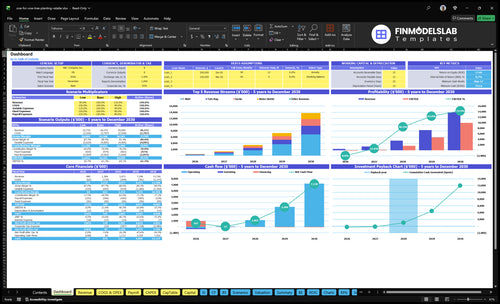
Core inputs and core outputs
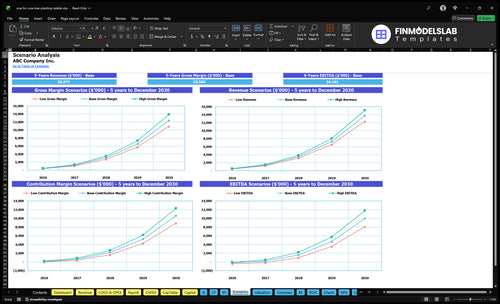
Three scenario analysis
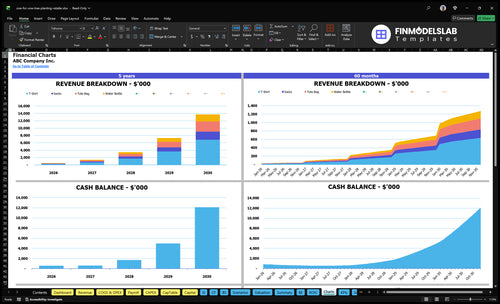
Presentation ready
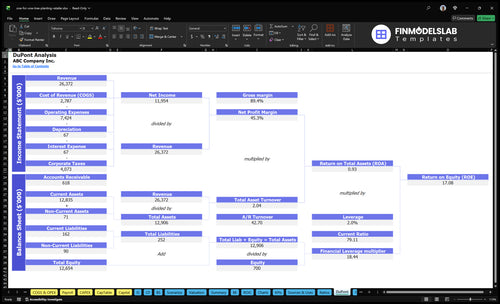
DuPont analysis
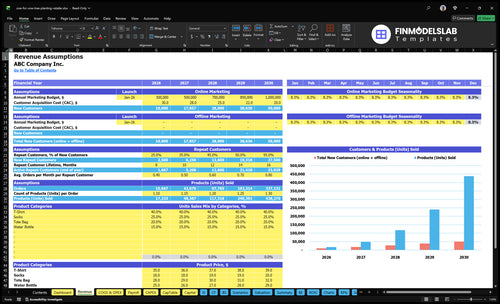
Researched revenue assumptions
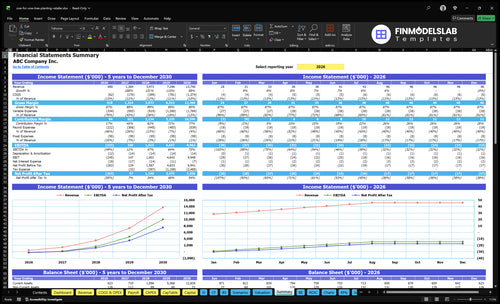
Lender-friendly financial outputs
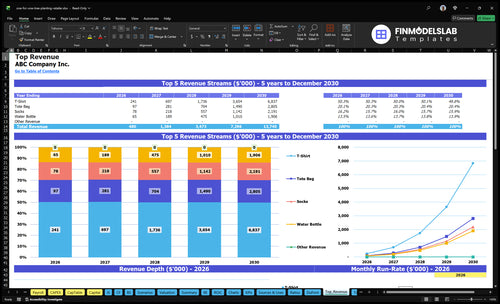
Revenue stream detailed view
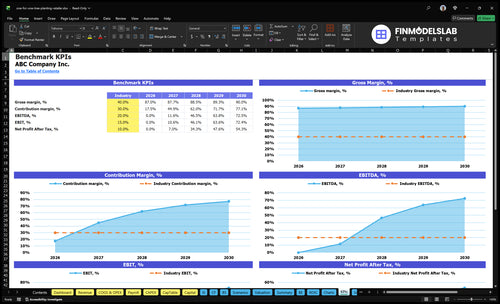
Performance metrics benchmark

I’m not a finance person, and this template kept the formulas out of my way. I saved about 6 hours because I could fill in the tabs without needing to build the model from scratch.
The pricing, cost, and growth inputs finally made sense because everything was grouped logically. It cut my planning time by a full afternoon and made it much easier to review with my partner.

I used to dread building three cases by hand, but this template made the switch simple. I set up low, base, and high scenarios in under an hour and got the meeting booked the same day.