Personal Injury Lawyer Financial Model Template for Excel and Google Sheets

The exact statements, charts, and assumptions a law firm owner needs - already built. You bring the case mix and fees. We bring the math.
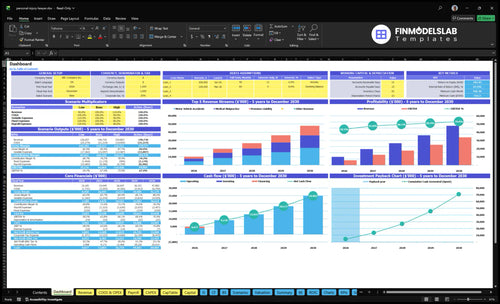
Personal Injury Law Firm Financial Model dashboard summarizing key KPIs, runway/cash and firm performance with a dynamic, investor-ready dashboard to expose cash-flow blind spots and present polished charts
Fully Editable
Instant Download
Professional Design
Pre-Built
No Expertise Is Needed
Personal Injury Law Firm Financial Model dashboard summarizing key KPIs, runway/cash and firm performance with a dynamic, investor-ready dashboard to expose cash-flow blind spots and present polished charts
Personal Injury Law Firm Financial Model dashboard summarizing key KPIs, runway, cash position and performance with a dynamic dashboard for investor-ready reporting and cash-flow blind spot visibility
Personal Injury Law Firm Financial Model ROIC calculation and charts showing return on invested capital, capital efficiency and profitability timing to assess case investments and firm returns with investor-ready outputs.
Personal Injury Law Firm Financial Model break-even analysis showing calculation and charts that identify the client volume and fee mix needed to cover fixed and variable costs, clarifying profitability timing and runway.
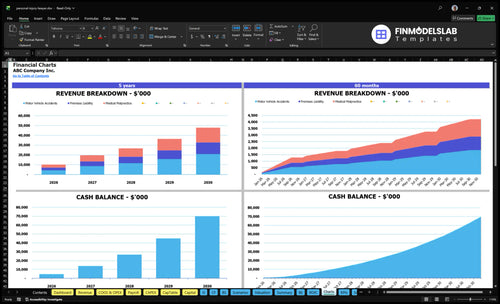
Personal Injury Law Firm Financial Model charts visualizing revenue, expenses, cash runway, and profitability trends to support investor-ready reporting and clear stakeholder KPI tracking.
Personal Injury Law Firm Financial Model ratios showing profitability, liquidity and efficiency metrics to evaluate firm performance, spot cash-flow blind spots, and clarify drivers for investors.
Personal Injury Law Firm Financial Model valuation shows enterprise and equity valuation outputs and sensitivity tables, helping assess firm value, investor returns and exit scenarios with clear assumptions.
Personal Injury Law Firm Financial Model revenue inputs allowing customization of case fees, contingency rates, referral splits, client intake volumes and growth drivers for scenario-ready forecasting and revenue sensitivity.
Personal Injury Law Firm Financial Model COGS and Opex inputs allowing customization of case costs, contingency fees, marketing, rent and overhead; user-friendly assumptions tab for scenario-ready expense modeling and cash-flow clarity
Personal Injury Law Firm Financial Model capex inputs allowing customization of capital expenditures, office build-out, technology and equipment costs to model investment needs and funding plans, fully customizable.
Personal Injury Law Firm Financial Model payroll inputs showing staffing, roles, salaries, benefits and hiring timelines so users can customize headcount costs, run scenarios and forecast payroll-driven cash needs.
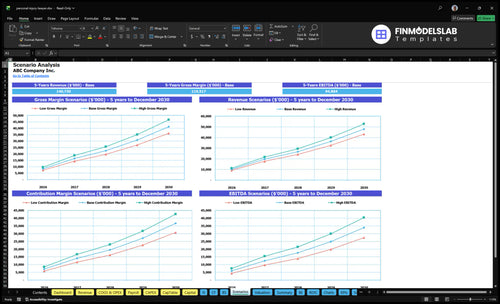
Personal Injury Law Firm Financial Model scenarios charts comparing low, base and high cases to test revenue, case volume and cost assumptions, revealing funding needs and fixing weak scenario testing.
Personal Injury Law Firm Financial Model financial summary reporting consolidated P&L, cash flow runway and balance sheet position, delivering clear funding needs, profitability drivers and investor-ready projections.
Personal Injury Law Firm Financial Model income statement report showing projected P&L, revenue streams, case-level fees and expenses, and net profit trends to assess profitability and investor-ready financial clarity.
Personal Injury Law Firm Financial Model cash flow report showing projected cash receipts, disbursements and runway to assess liquidity, detect cash-flow blind spots and support investor-ready forecasts
Personal Injury Law Firm Financial Model balance sheet report showing assets, liabilities and equity position to assess solvency and net worth, supporting investor-ready clarity and liquidity planning
Personal Injury Law Firm Financial Model top expenses report showing major cost categories and breakdown to identify highest legal, staffing, and operating costs for clearer budgeting and investor-ready clarity.
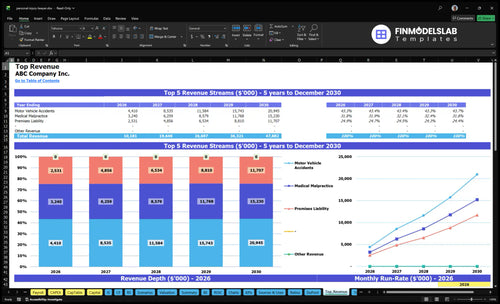
Personal Injury Law Firm Financial Model top revenue report showing leading case types and client segments, delivering clear revenue drivers and trend breakdowns for investor-ready forecasts and performance review
Personal Injury Law Firm Financial Model sources and uses report detailing funding needs, allocation of proceeds and uses, and a clear funding plan to reconcile capital requirements and investor expectations, investor-ready formatting
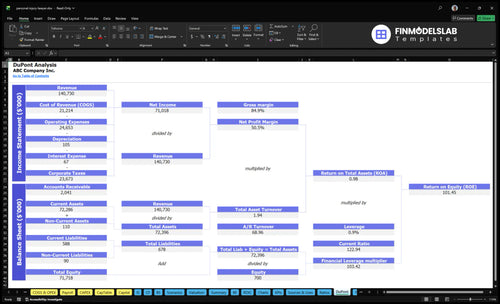
Personal Injury Law Firm Financial Model Dupont report showing DuPont decomposition of ROE to reveal profitability drivers, efficiency and leverage insights for investors with clear error checks and assumptions clarity
Personal Injury Law Firm Financial Model captable inputs and calculations showing equity holders, ownership stakes, dilution scenarios and customizable fundraising rounds to model investor structure and funding impact.
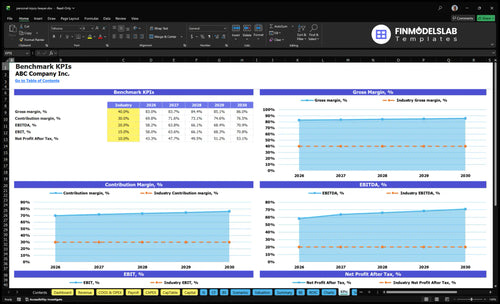
Personal Injury Law Firm Financial Model KPI charts visualizing revenue growth, case win rates, lawyer productivity, cash runway and margin trends for stakeholder reporting with polished dynamic visuals
Fully Editable
Instant Download
Professional Design
Pre-Built
No Expertise Is Needed
Personal Injury Law Firm Bundle
See included products:
Financial Model iPersonal Injury Law Firm Bundle Financial Model template included in this product.
$149 $109
ADD TO YOUR ORDER
Business Plan iPersonal Injury Law Firm Bundle Business Plan template included in this product.
$79 $59
Pitch Deck iPersonal Injury Law Firm Bundle Pitch Deck template included in this product.
$49 $29
YOU SAVE $0 TODAY
30-Day Money-Back Guarantee
Created by a Former CFO
Updated for 2026
One-Time Purchase
Description
MODEL OVERVIEW

What Is the Personal Injury Law Firm Financial Model?

It is an editable five-year Excel and Google Sheets workbook that links client cohorts, billable hours, hourly rates, scenarios, and financial statements.

Use the workbook to translate acquisition spending, client mix, case duration, billable workload, and service pricing into a structured forecast for your firm.

Editable assumptions feed the revenue engine, operating costs, payroll, capital spending, scenarios, and the linked financial reports shown in the workbook.

Built around client cohorts The model tracks new and continuing clients before converting active clients into monthly billable hours and revenue.
CLIENT COHORT REVENUE ENGINE

How Does the Personal Injury Law Firm Calculate Revenue?

The model acquires clients from marketing spend, retains cohorts by service tier, converts active clients into billable hours, and applies hourly rates.

01

Acquire Clients

New customers equal marketing spend divided by customer acquisition cost.

02

Allocate Cohorts

Allocate new customers by service tier and retain each cohort for its stated lifetime.

03

Build Active Base

Active customers combine starting customers with every new cohort that remains active.

04

Calculate Hours

Billable hours equal active customers times average monthly billable hours per active customer.

05

Calculate Revenue

Multiply billable hours by each tier’s hourly rate, then total revenue across tiers and months.

CORE FORMULA Revenue = Billable hours × Hourly rate
01 / REVENUE ASSUMPTIONS

How Are Client Cohorts and Billable Hours Entered?

The Revenue Assumptions sheet connects marketing spend, CAC, service allocation, client lifetime, billable hours, and hourly rates to the cohort-based forecast.

Personal Injury Law Firm Revenue Assumptions worksheet with marketing budget, CAC, customer allocation, lifetime, billable hours, and hourly rates REVENUE ASSUMPTIONS
Revenue Assumptions view showing acquisition, client mix, retention, billable hours, and pricing inputs.
02 / COGS & OPEX

How Are Firm Costs Structured?

The COGS & OPEX sheet separates direct case costs, variable operating expenses, and fixed overhead for monthly and annual expense planning.

Personal Injury Law Firm COGS and OPEX worksheet with direct case costs, variable expenses, fixed overhead, start dates, and monthly cost schedules COGS & OPEX
COGS & OPEX view separating direct costs, variable expenses, and fixed operating overhead.
03 / SCENARIO ANALYSIS

What Can the Scenario Analysis Compare?

The Scenario Analysis view compares Low, Base, and High outcomes for revenue, gross margin, contribution margin, and EBITDA across the five-year forecast.

Personal Injury Law Firm Scenario Analysis worksheet comparing Low, Base, and High revenue, gross margin, contribution margin, and EBITDA outcomes SCENARIO ANALYSIS
Scenario Analysis charts compare Low, Base, and High financial outcomes across five years.
04 / DASHBOARD

What Does the Dashboard Bring Together?

The Dashboard combines setup controls, scenario multipliers, headline KPIs, revenue mix, profitability, cash flow, and investment payback in one management view.

Personal Injury Law Firm Dashboard with model setup, scenario multipliers, KPIs, revenue mix, profitability, cash flow, and investment payback charts DASHBOARD
Dashboard view combining setup controls, scenario outputs, KPIs, revenue, cash flow, and payback.
PRODUCT FIT

Is the Personal Injury Law Firm Financial Model Right for You?

It fits firms planning revenue from active-client cohorts and billable hours; structurally different fee, case-timing, or reporting logic may require custom modeling.

READY-MADE MODEL

A Good Fit

  • Your revenue plan uses marketing spend and CAC to acquire new clients.
  • You can group clients into service tiers with defined customer lifetimes.
  • Billable hours per active client and hourly rates are material revenue drivers.
  • You want Low, Base, and High cases linked to standard financial reports.
CUSTOM STRUCTURE

Consider Custom Modeling

  • Your core revenue depends mainly on contingency settlements rather than billable hours.
  • You need case-resolution lags, win probabilities, or settlement waterfalls built into revenue.
  • You require specialized trust-accounting, referral, or case-financing schedules beyond this structure.
  • You need materially different reporting logic or bespoke operating schedules.

The template is a planning starting point, not a guarantee of performance.

CUSTOM FINANCIAL MODELING SERVICE

Need a Model Built Around Your Requirements?

Financial Models Lab can build or adapt a model when you need different revenue logic, operating schedules, or reporting requirements.

ORDER A CUSTOM FINANCIAL MODEL
AFTER CHECKOUT

What You Receive

After checkout, you receive an editable Excel and Google Sheets financial model for five-year forecasting, scenario analysis, and linked financial reporting.

01

Editable workbook

Update the model inputs to reflect your firm’s operating assumptions and planning case.

02

5-year forecast

Review the five-year projection with monthly and annual schedules visible across the workbook.

03

Scenario analysis

Compare Low, Base, and High cases using the model’s scenario framework.

04

Financial reports

Use the linked income statement, cash flow statement, balance sheet, and management reports.

BEFORE YOU BUY

Personal Injury Law Firm Financial Model FAQ

The essential answers are visible in full, with no accordion clicks required.

01

How does the model calculate Personal Injury Law Firm revenue?

It converts marketing spend into new clients through CAC, retains client cohorts, calculates active-client billable hours, and applies service-specific hourly rates.

02

Which assumptions can I change?

You can edit launch timing, starting customers, marketing budget and seasonality, CAC, tier allocation, customer lifetime, billable hours, and hourly rates.

03

What can I compare in the Scenario Analysis view?

You can compare Low, Base, and High cases across revenue, gross margin, contribution margin, and EBITDA over the five-year forecast.

04

Which financial outputs are included?

The workbook includes an income statement, cash flow statement, balance sheet, Dashboard, Summary, break-even, ROIC, charts, KPIs, and other linked reports.

05

Can Financial Models Lab adapt the model to custom requirements?

Yes. Financial Models Lab offers custom financial modeling for different revenue logic, operating schedules, or reporting requirements.

06

Is the workbook a forecast or a guarantee?

It is a planning forecast driven by the assumptions entered into the workbook, not a guarantee of financial or business performance.

What Does the Personal Injury Law Firm Financial Model Contain?

This pre-written financial model for personal injury lawyers provides everything you need to build a comprehensive financial plan, from initial startup costs to a five-year profit and loss forecast.
personal injury lawyer financial model dashboard financialmodelslab

All-in-one Dashboard

Core inputs and core outputs

personal injury lawyer financial model scenarios financialmodelslab

Low/Base/High

Three scenario analysis

personal injury lawyer financial model charts financialmodelslab

Professional Charts

Presentation ready

personal injury lawyer financial model dupont financialmodelslab

ROE Components

DuPont analysis

personal injury lawyer financial model revenue financialmodelslab

Revenue Inputs

Researched revenue assumptions

personal injury lawyer financial model summary financialmodelslab

Bank-Ready Reports

Lender-friendly financial outputs

personal injury lawyer financial model top revenue financialmodelslab

Revenue Breakdown

Revenue stream detailed view

personal injury lawyer financial model kpis financialmodelslab

KPI Dashboard

Performance metrics benchmark

Trusted by 25,000+ startup founders, investors and CPAs

Predict Cash Gaps Early

Megan Carter, TX

5 star rating

This template made runway planning much easier, so I could spot shortfalls before they turned into a problem and adjust timing on expenses. It saved me hours of guessing every month.

All Reports In One Place

Daniel Brooks, FL

5 star rating

I used to have P&L, cash flow, and charts scattered across different files. Now everything is in one workbook, and I cut report prep by about 6 hours a week.

Clear Structure For Investors

Lauren Mitchell, CA

5 star rating

I wasn’t sure what investors wanted to see, but this model gave me the right structure and output. It helped me build a cleaner deck and book a meeting faster.