

Set Daily Covers
Forecast average covers or orders for each day of the operating week.


The editable Excel and Google Sheets model forecasts five years of themed restaurant operations from weekday covers and average checks through scenarios and financial reports.
Use the model to translate your opening calendar, weekday covers, average checks, seasonality, revenue mix, costs, staffing, and investment assumptions into a structured forecast.
Editable operating inputs feed the model’s calculations, while linked statements and management views show how those assumptions affect revenue, profitability, cash flow, and financial position.
The model converts weekday covers into forecast volume, applies monthly seasonality and midweek or weekend checks, then allocates sales across the selected revenue mix.
Forecast average covers or orders for each day of the operating week.
Convert the weekday pattern using operating days or weeks, opening timing, and closures.
Adjust monthly covers with the seasonality assumptions entered for the themed restaurant.
Multiply covers by the relevant midweek or weekend average check.
Allocate sales by revenue mix and sum the monthly category revenue.
The Revenue worksheet organizes opening timing, weekday covers, seasonality, average checks, and revenue mix that drive the model’s sales forecast.
 REVENUE
The COGS & OPEX worksheet separates direct costs, variable operating expenses, and fixed expenses so operating assumptions can flow into monthly projections.
 COGS & OPEX
The Scenarios report compares Low, Base, and High outcomes across revenue, gross margin, contribution margin, and EBITDA over the five-year forecast.
 SCENARIOS
The Dashboard combines model setup, scenario controls, core financials, revenue mix, profitability, cash flow, and payback views in one management screen.
 DASHBOARD
The ready-made model fits a themed restaurant driven by covers and average checks; different revenue logic or reporting structures may call for custom modeling.
The template is a planning starting point, not a guarantee of performance.
Financial Models Lab can build or adapt a model when your plan needs different revenue logic, operating schedules, or financial reporting.
ORDER A CUSTOM FINANCIAL MODELAfter checkout, you receive an instantly downloadable, editable Excel financial model with a five-year forecast, scenario analysis, and linked financial reporting.
Change the model’s operating and financial assumptions in the Excel file.
Project themed restaurant performance across the model’s five-year planning horizon.
Compare Low, Base, and High cases through the dedicated scenario view.
Review linked income statement, cash flow, balance sheet, and management outputs.
The essential answers are visible in full, with no accordion clicks required.
It converts weekday covers into forecast volume, applies seasonality and average checks, then allocates and sums sales by revenue mix.
You can edit the opening date, weekday covers, operating calendar, closures, monthly seasonality, average checks, revenue mix, and ancillary sales.
The Scenarios report compares the three cases across revenue, gross margin, contribution margin, and EBITDA over the forecast horizon.
The gallery shows the income statement, cash flow statement, balance sheet, Dashboard, Scenarios, Summary, and additional analysis reports.
Yes. Financial Models Lab offers custom financial modeling when you need different revenue logic, operating schedules, or reporting structures.
It is a planning forecast based on the assumptions entered into the workbook, not a guarantee of business performance.
You get a downloadable financial model for a themed restaurant business plan, complete with a dynamic dashboard, 5-year financial statements, and detailed breakdowns of revenue, costs, and startup expenses.
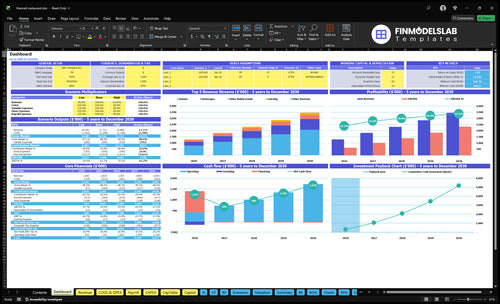
Core inputs and core outputs
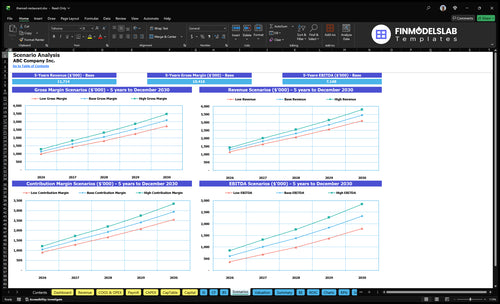
Three scenario analysis
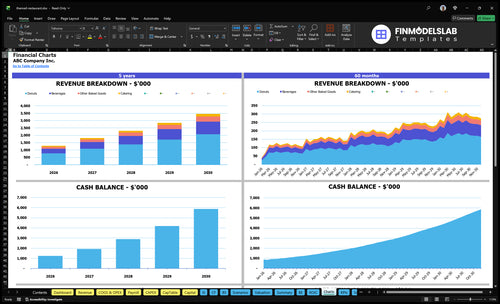
Presentation ready
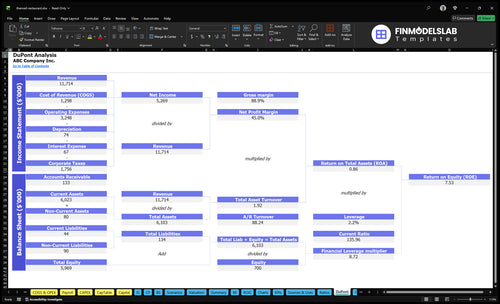
DuPont analysis
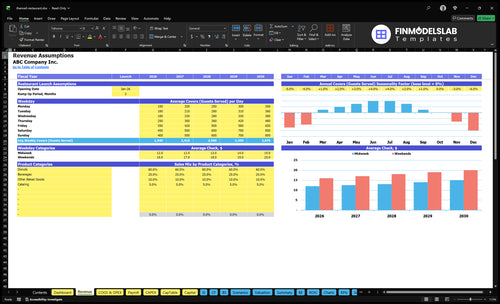
Researched revenue assumptions
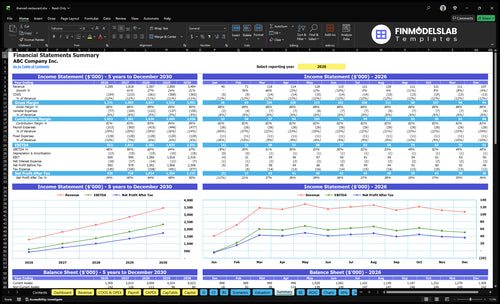
Lender-friendly financial outputs
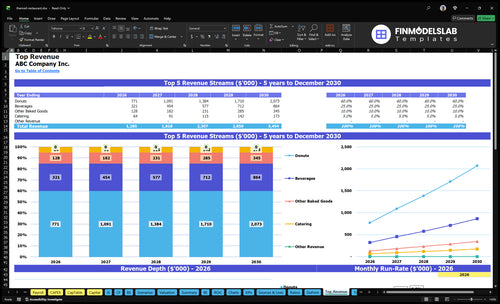
Revenue stream detailed view
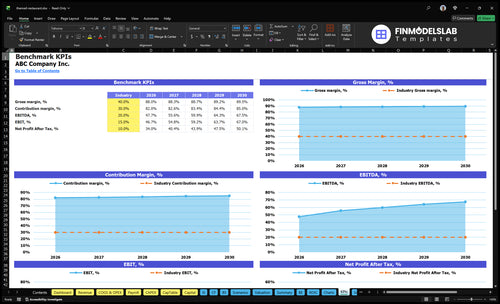
Performance metrics benchmark

It was tedious to juggle low, base, and high cases by hand, but this template laid them out clearly in one place. I cut planning time by a few hours and could compare assumptions without rebuilding the model each time.
I could finally see margins and break-even without digging through formulas. The model made the numbers easier to explain, and I had a cleaner conversation with my partner in one meeting.

Building the restaurant financials manually was eating up my week, but this template got me moving fast. I saved roughly 10 hours and had a working first draft the same afternoon.